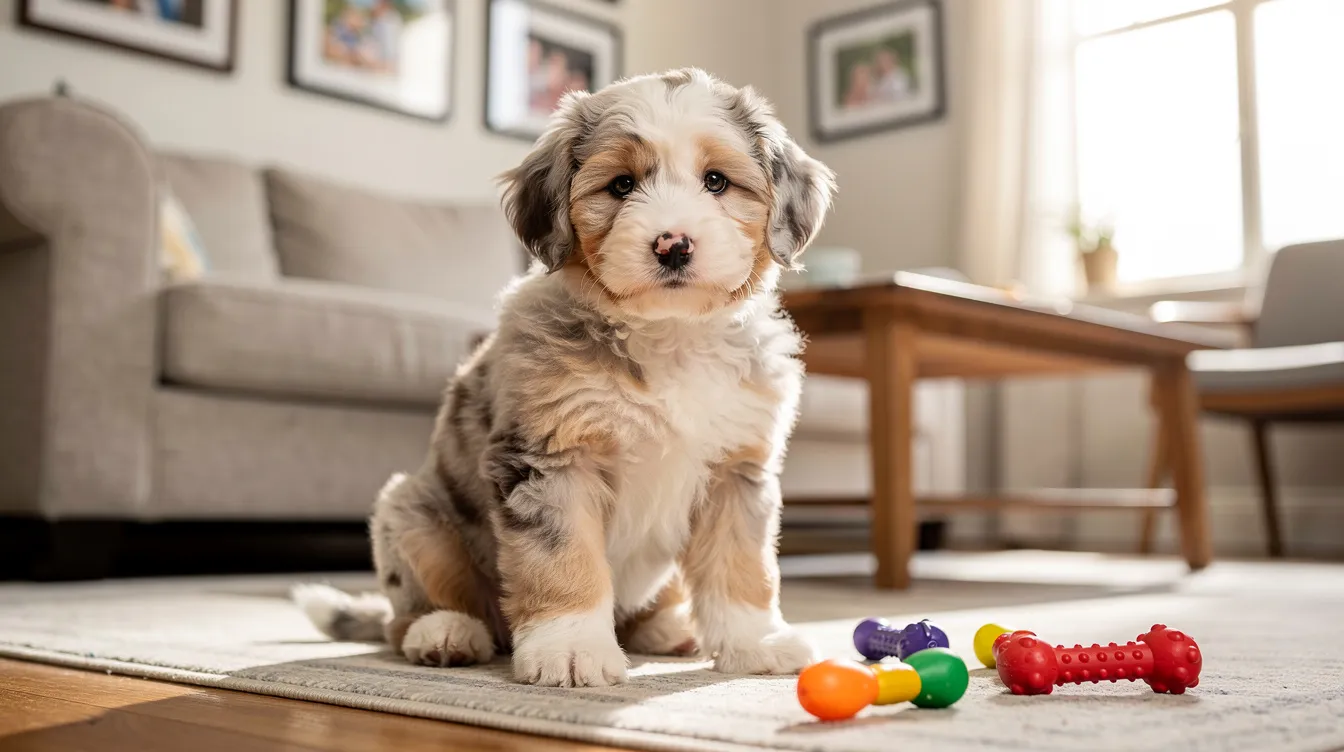
Mini Goldendoodle Weight: Size Guide & Growth Chart from Bliss Kennels
If you're thinking about bringing home a mini Goldendoodle, one of the first questions on your mind is probably: how big will this puppy actually get? It's a fair question, and the answer matters more than most people realize. Your dog's adult weight affects everything from how much space you need to how easily you can lift them into the car for a weekend trip. This guide breaks down mini Goldendoodle weight by age, explains when growth stops, and gives you a practical growth chart to track your puppy from 8 weeks to 18 months.
Key Takeaways
- Most mini Goldendoodles typically weigh between 15 and 35 pounds as adults, with some males approaching 40 pounds depending on parent sizes and bone structure.
- Mini Goldendoodles generally reach their adult height by 10–12 months, but their adult weight and body condition continue filling out until 12–18 months.
- Goldendoodle sizes fall into distinct size categories (petite, mini, medium, standard), and understanding where a miniature Goldendoodle fits helps you choose the right match for your home.
- A mini Goldendoodle growth chart tracks expected weight at key ages, but genetics, nutrition, and activity level all influence how quickly a puppy reaches its final size.
- Bliss Kennels, based in Sussex County, NJ and serving families across New Jersey, New York, Pennsylvania, and the Northeast, provides ongoing support to help owners track body condition and make informed feeding decisions throughout their dog's life.
What Is a Mini Goldendoodle? (And Where Weight Fits In)
A mini Goldendoodle is a crossbreed between a Golden Retriever and a smaller Poodle, usually a miniature Poodle. The goal of the cross is straightforward: combine the Golden Retriever's friendly, trainable personality with the Poodle's intelligence and low shedding coats, all packed into a smaller size that works for more households.
The term "mini Goldendoodle" describes a size range, not a specific generation. These dogs can be F1 (50/50 Golden Retriever and mini Poodle), F1B (backcross with more poodle genetics), or multigen puppies bred across several generations. Their expected adult size depends far more on the actual weight of each parent than on generation labels alone. Mini Goldendoodles are a crossbreed between Golden Retrievers and Poodles, and they can vary significantly in size due to genetics.
For this article, the typical mini Goldendoodle adult weight range is about 15–35 pounds, with adult height measuring roughly 13–20 inches at the shoulder. Mini Goldendoodles typically live 15–17 years. Some males from larger-boned lines may reach closer to 40 pounds. Bliss Kennels helps families set realistic expectations by discussing parent sizes, previous puppies from similar pairings, and the difference between mini, medium, and standard Goldendoodles based on lifestyle and handling ability, drawing on their experience as a family-run doodle breeder in Sussex County, New Jersey.

Mini Goldendoodle Size & Weight Range at Adulthood
So how big will your mini Goldendoodle be when fully grown? Most mature somewhere between 15 and 35 pounds, standing about 14–17 inches tall at the withers. A small Goldendoodle on the lower end of that weight range may stay under 20 pounds, while a larger mini from bigger parent lines can approach 40 pounds. Two mini Goldendoodles from the same litter can differ by 15–20 pounds at maturity, which is why treating size as a broad range rather than a fixed number is essential.
Generation matters too. F1 mini Goldendoodles generally weigh 30–50 pounds as adults because the Golden Retriever side contributes more size. F1B mini Goldendoodles typically range from 15–35 pounds since the additional poodle parent influence often brings the weight down. Traditional mini Goldendoodles are expected to weigh 25–40 pounds, while multigen mini Goldendoodles generally weigh 10–35 pounds as adults due to more established breeding lines.
Males typically weigh 25–35 pounds while females weigh 15–25 pounds, but genetics, overall build, and the size of the poodle parent used for breeding matter more than sex alone.
Quick reference for adult mini Goldendoodle weight:
- Adult weight: 15–35 lbs (some males up to ~40 lbs)
- Adult height: 13–20 inches at the shoulder
- Males: tend toward upper range
- Females: tend toward lower range
- Weight varies based on the size of the Poodle parent used for breeding
Mini vs Medium vs Standard Goldendoodles: How Sizes Compare
Understanding what size Goldendoodle is right for you starts with knowing how size ranges break down across the breed. Labels vary by breeder, but here are the most common size categories:
| Size Category | Typical Adult Weight | Typical Adult Height |
|---|---|---|
| Petite / Toy | Under ~25 lbs | Under 14 inches |
| Mini / Miniature | ~15–35 lbs | 14–17 inches |
| Medium Goldendoodle | ~36–50 lbs | 17–21 inches |
| Standard Goldendoodle | 51+ lbs | Over 21 inches |
Keep in mind that mini Goldendoodles can mature outside their expected size category. A dog labeled "mini" by one breeder might fall into another breeder's medium size definition. Bliss Kennels works with families across New Jersey, New York, and Pennsylvania to match them with the right Goldendoodle size based on home layout, travel habits, and physical handling comfort, and they offer miniature Goldendoodle puppies for sale to suit a wide range of lifestyles. Adult size is influenced by both parents' weights, so asking about dam and sire measurements is always worthwhile.
Mini Goldendoodle Growth Chart by Age
Growth charts are estimates, not guarantees. Exercise, nutrition, genetics, and health all influence how quickly a puppy reaches its expected adult weight. That said, tracking your dog's height and weight at regular intervals gives you confidence that growth is progressing normally, especially when paired with a comprehensive guide to raising mini Goldendoodle puppies.
Here is a general mini Goldendoodle growth chart for puppies expected to reach 20–35 pounds as adults:
| Age | Smaller Mini (lbs) | Larger Mini (lbs) | % of Adult Weight |
|---|---|---|---|
| 8 weeks | 4-6 | 7-9 | ~15–17% |
| 12 weeks | 8–10 | 11–15 | ~28–30% |
| 4 months | 11–15 | 15–20 | ~40–55% |
| 6 months | 18–24 | 22–30 | ~60–70% |
| 9 months | 23–28 | 28–35 | ~80-90% |
| 12 months | 25–30 | 30–35 | ~95–100% |
| 18 months | 26–35 | Final fill | Adult weight |
Typical weight for mini Goldendoodles at 8 weeks is 4 to 9 pounds. Most mini Goldendoodles reach roughly half of their adult weight by 4 months. Growth for mini Goldendoodles includes a rapid phase between 3 and 6 months, and an average weight milestone at 9 months is between 15 and 30 pounds. Puppies typically reach full adult weight by around 12 to 14 months of age.
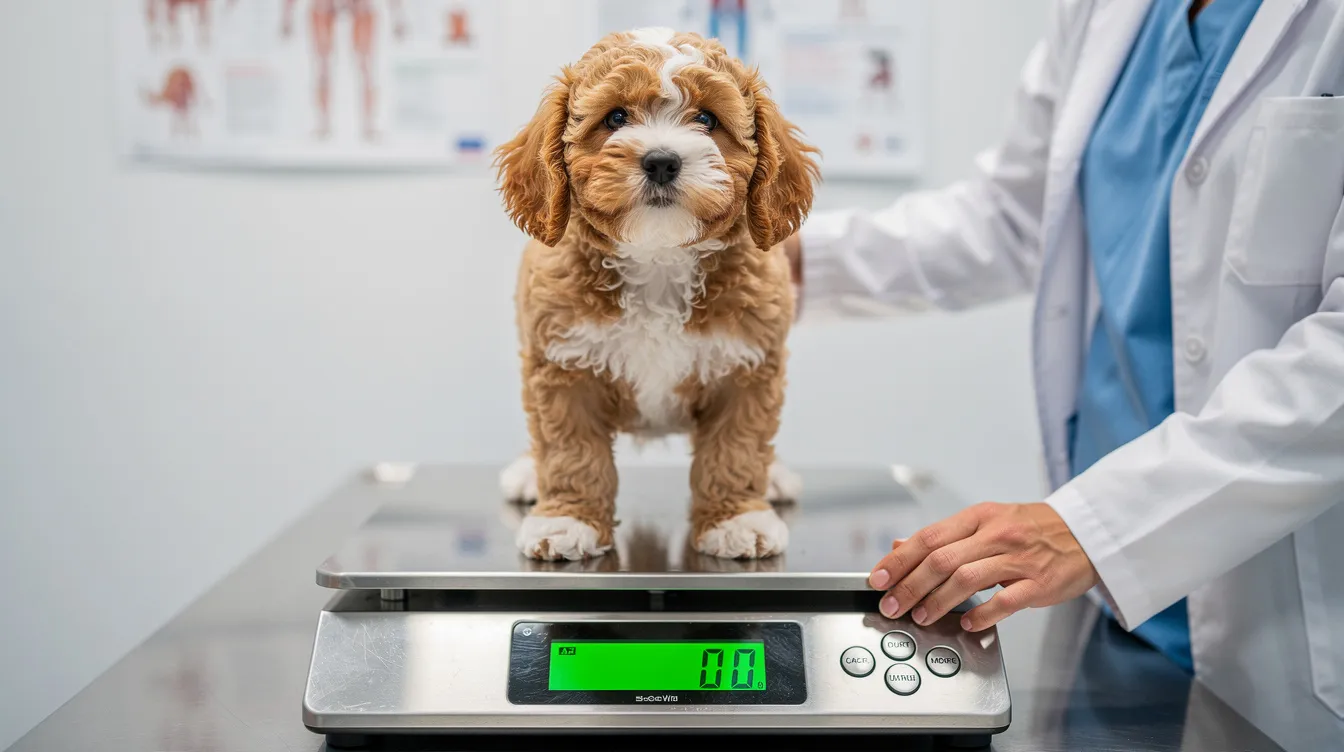
To track at home, step on a bathroom scale holding your puppy, then weigh yourself alone and subtract. Record weights monthly at the same time of day. If your puppy's growth suddenly stalls, drops, or skyrockets outside the expected weight range, contact your veterinarian. Bliss Kennels also welcomes growth photos from their families and can compare your pup's progress against siblings and related litters. Check the Puppy Start Guide for additional tracking tips.
When Is a Mini Goldendoodle Considered Fully Grown?
There's a meaningful difference between being fully grown in height versus reaching mature adult weight and body condition. Most mini Goldendoodles finish their height growth by 9–11 months, meaning their legs and frame stop getting taller. Mini Goldendoodles can reach adult size by 10–14 months, but their chest, muscle tone, and overall build continue filling out until roughly 16–18 months. For more context on development and care across different breeds, Bliss Kennels maintains a dog breeds and pet care blog that many owners find helpful during this stage.
After their first birthday, don't be surprised if the scale shifts a pound or two in either direction. Some owners notice minor weight changes after spay or neuter surgery because metabolism can slow slightly. The key is maintaining a lean, athletic body condition rather than chasing a specific number on the growth chart.
If you purchased from Bliss Kennels, sending updated photos and weights lets the breeder compare your pup to siblings from the same litter and offer personalized feedback. Goldendoodles typically settle into their final weight and personality well before their second birthday.
What Affects Mini Goldendoodle Adult Weight and Size
No breeder can guarantee an exact adult weight. However, several factors make estimates more or less reliable:
- Parent and grandparent size: The single strongest predictor. Individual sizes can vary based on parent sizes and generation. A miniature Poodle sire under 15 pounds paired with a smaller Golden Retriever dam will generally produce smaller dogs than a medium Poodle crossed with a large Golden.
- Generation: F1 mini Goldendoodles generally weigh 30–50 pounds as adults because the Golden Retriever side brings substantial frame. F1B mini Goldendoodles typically range from 15–35 pounds. Multigen lines tend to produce more predictable size ranges.
- Sex: Males lean toward the upper end; females toward the lower end, though overlap is common.
- Nutrition: Nutrition affects growth and body condition in puppies. Overfeeding during the first year can stress developing joints, while inadequate nutrition risks stunting growth or weakening the immune system.
- Activity level: Active puppies build lean muscle; sedentary ones risk excess fat. Both affect the number on the scale.
- Health: Parasites, metabolic issues, or hypoglycemia (especially in very young puppies) can derail normal growth curves. Mini Goldendoodles can suffer from hypoglycemia, especially as puppies.
Body condition matters as much as raw weight. Two dogs with the same bone structure can weigh very different amounts depending on whether one is lean and the other overweight. Always look at the dog's waistline and rib coverage alongside the scale.
Bliss Kennels relies on years of experience with their own breeding lines and feedback from customer reviews of their puppies and service to give families realistic, range-based expected adult size estimates before and after pickup.
Estimating Your Mini Goldendoodle's Adult Weight
A common rule of thumb: double your puppy's weight at 16 weeks to estimate adult weight. For a mini weighing 12 pounds at 4 months, that suggests roughly 24 pounds fully grown. This method works better for purebreds and has real limitations for mixed-breed dogs like Goldendoodles, but it gives a useful ballpark.
A more reliable approach combines several clues:
- Record weight monthly and compare to the growth chart above.
- Ask your breeder for sire and dam adult weights.
- Watch your pup's overall build: leg length, chest depth, and bone structure all hint at final size.
- Don't rely on a single indicator. Big paws or a fluffy coat can be misleading.
Mini Goldendoodles can vary between smaller 15-pound ranges and 40 pounds depending on lineage, so combining parent data, growth trajectory, and physical observation gives the best adult size estimate. Bliss Kennels is happy to review puppy photos and weights for their families to help refine predictions as the puppy matures.
Healthy Body Condition for Mini Goldendoodles
A body condition score is the simplest way to tell if your miniature Goldendoodle is at a healthy weight. Here's what to look for:
- Ribs: You should be able to feel them with light pressure, covered by a thin layer of fat but not visibly protruding.
- Waist: Visible from above, with a noticeable taper behind the ribcage.
- Tuck-up: The belly should angle upward when viewed from the side.
Mini Goldendoodles need roughly 1–1.5 cups of high-quality dog food daily, adjusted for age, activity level, and brand calorie density. Puppies do best on three meals per day, transitioning to two as adults. They also need about an ounce of water per pound of body weight daily, and many of the same nutrition principles apply to other doodle breeds such as the Labradoodles raised by Bliss Kennels.
Chronic overfeeding in smaller dogs puts serious strain on joints and increases the risk of patellar luxation, a common health issue in mini Goldendoodles alongside hypothyroidism. Mini Goldendoodles may also experience dental disease due to crowded teeth. Regular vet visits are essential for health screenings, especially after age 7. If you're unsure whether your dog is underweight or carrying extra weight, consult your veterinarian or reach out to your breeder rather than simply increasing food to hit a target number.
Mini Goldendoodle Weight, Activity, and Daily Life
A mini Goldendoodle's smaller size doesn't mean low energy. Most are playful, curious dogs that need consistent daily exercise. Mini Goldendoodles require 30–45 minutes of exercise daily, ideally split across multiple sessions: a morning walk, afternoon play, and some mental enrichment through training or toys in the evening, just as you would provide for any well-socialized doodle puppy from Bliss Kennels.
Their moderate adult weight makes apartment living practical. A 25-pound mini is far easier to manage in tight hallways, elevators, and on public transit compared to a 65-pound standard Goldendoodle. For families who travel frequently between New Jersey, New York, and Pennsylvania, the mini size means simpler car rides, manageable carrier dimensions, and fewer hotel restrictions.
Bliss Kennels' nationwide delivery service is designed around keeping Goldendoodle puppies safe and comfortable during transport, and their puppy breed photo gallery gives families a sense of what different doodle crosses look like as they grow. A puppy that will mature into a compact 20–35 pound adult is simply easier to handle at every stage, from the first car ride home to years of adventures with your family and children.

Bliss Kennels: Helping NJ, NY & PA Families Choose the Right Mini Goldendoodle Size
Bliss Kennels is a family-run breeder located in Sussex County, New Jersey, specializing in Goldendoodles, Labradoodles, Cavapoos, Bernedoodles, and Aussiedoodles. Puppies are typically priced around $2,000 and raised on a family farm with a focus on health, temperament, and early socialization, reflecting their approach as one of the top Goldendoodle breeders for family companions. You can read the essential guide to the miniature Goldendoodle for a deeper look at the breed.
While Bliss Kennels does not offer DNA or genetic testing or written health guarantees, they carefully select parents for sound temperament, solid structure, and family-companion traits, including manageable adult size. They offer lifetime breeder support, help families understand expected weight and body condition at every stage, and recommend their own nutrition products like joint powder and oils to support healthy growth, similar to the guidance they provide for Cavapoo and Aussiedoodle families in New Jersey and New York.
Their primary service areas include New Jersey, the New York City metro area, eastern Pennsylvania, and the broader Northeast, though their professional delivery service can safely bring a mini Goldendoodle puppy to families anywhere in the country.
Ready to explore your options? Call
973-876-1680, email
sjel1971@gmail.com, or visit
Bliss Kennels to discuss current
available puppies, expected adult sizes for each litter, and whether a mini, medium, or standard Goldendoodle fits your home and diet preferences best.
Frequently Asked Questions About Mini Goldendoodle Weight
How much should an 8-week-old Mini Goldendoodle puppy weigh?
Most healthy mini Goldendoodle puppies weigh roughly 4–9 pounds at 8 weeks. Puppies from smaller-line parents tend to fall toward the lower end, while those from larger mini pairings may be closer to 9 pounds. A slight deviation in either direction is perfectly normal as long as your veterinarian confirms a healthy body condition and the puppy is eating and gaining steadily.
Can a Mini Goldendoodle end up larger than the breeder's estimate?
Yes. Genetics combine unpredictably in any crossbreed, and a puppy estimated to reach 20–30 pounds could end up closer to 35–38 pounds if it inherits more of the Golden Retriever's frame. Reputable breeders like Bliss Kennels always present the expected adult weight as a range rather than a guarantee, helping adults in the family prepare for either end of the spectrum.
Is a 40-pound Mini Goldendoodle still considered "mini"?
It depends on the breeder's classification system. Some breeders group the upper 30s into their miniature Goldendoodle category, while others would call a 40-pound dog a small or medium Goldendoodle. The label matters less than whether that weight fits your space, your ability to lift the dog, and your daily life. Focus on the actual weight and the dog's height rather than the micro differences in terminology.
Does spaying or neutering change my Mini Goldendoodle's adult weight?
Spaying or neutering does not change a dog's genetic potential for size. However, the procedure can slow metabolism slightly, and if food portions aren't adjusted, gradual weight gain is common. Monitor body condition closely in the months following surgery and ask your veterinarian for updated feeding guidance to keep your mini at a healthy weight.
When should I switch my Mini Goldendoodle from puppy food to adult food?
Many mini Goldendoodles are ready to begin the transition between 6 and 12 months, depending on their individual growth curve. Puppies should transition to adult food once most height growth has slowed and the dog is approaching its expected weight plateau. Make the switch gradually over 7–10 days, mixing increasing amounts of adult food with decreasing puppy food. Confirm timing with your veterinarian or, if you're a Bliss Kennels family, reach out for personalized guidance based on your pup's current weight and age.
Find Your Perfect-Sized Mini Goldendoodle with Bliss Kennels
If a mini Goldendoodle's manageable weight, compact build, and warm personality sound like the right fit for your family, Bliss Kennels is here to help you take the next step. Whether you're in a New Jersey townhome, a New York City apartment, or a Pennsylvania farmhouse, their team will walk you through expected adult size for each available litter, recommend nutrition products for healthy growth, and provide ongoing support long after your puppy comes home.
Visit Bliss Kennels, call 973-876-1680, or email sjel1971@gmail.com to ask about upcoming mini Goldendoodle litters, adult weight expectations, and everything you need to welcome a well-sized, well-socialized companion into your life. Your next family member is waiting.
Recent Posts