Miniature Goldendoodle: Complete Guide to the Mini Goldendoodle From Bliss Kennels
If you have been searching for a cute, compact, and loving personality in a furry friend that fits your family and your living space, the miniature goldendoodle deserves a close look. This guide covers everything you need to know about this popular hybrid dog, from origins and temperament to grooming, health, and what it takes to bring one home.
Key Takeaways
- A mini goldendoodle is a cross between a golden retriever and a miniature poodle, typically weighing 15–35 pounds and bred for low shedding and a family-friendly temperament.
- Mini goldendoodles are among the most popular doodle breeds in the U.S. because they are the perfect size for homes and apartments, highly intelligent, great with kids, and suitable for many allergy sufferers.
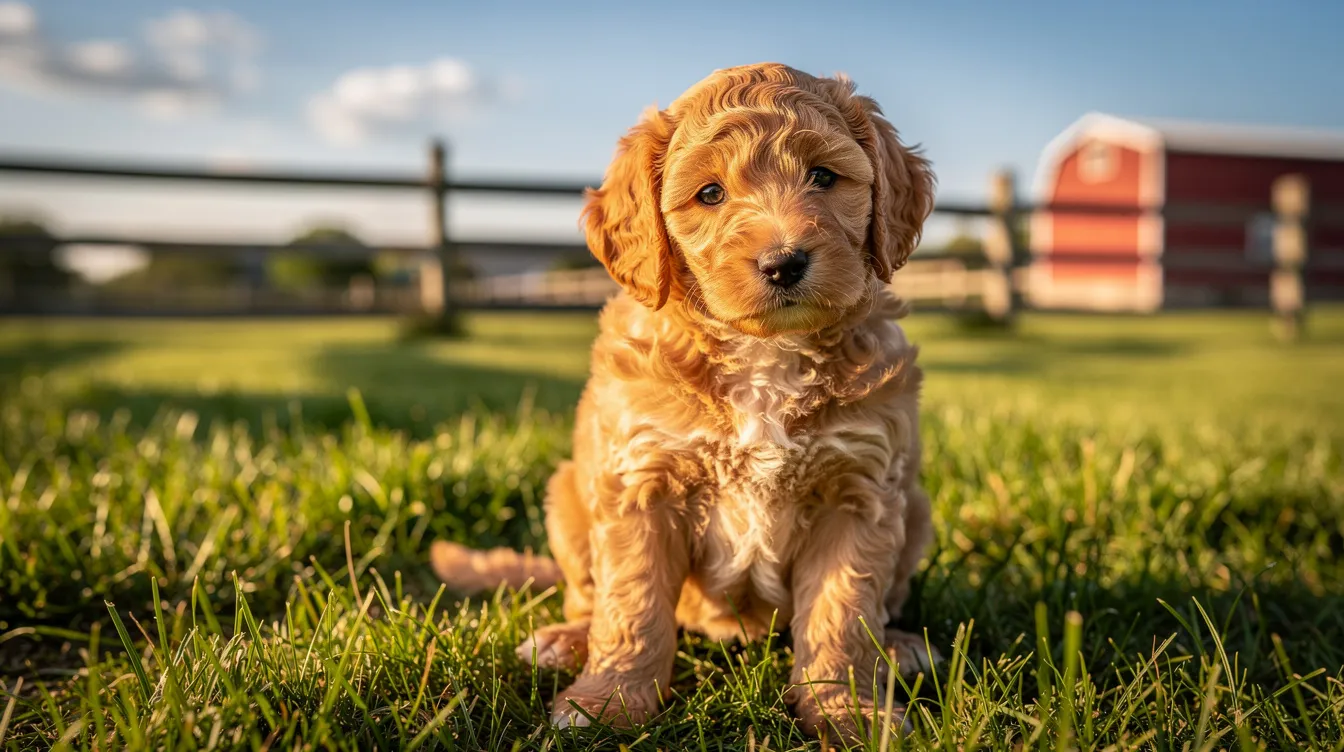
- Bliss Kennels is a small family breeder in Sussex County, NJ, offering miniature goldendoodle puppies along with other doodle hybrids, all raised on a farm with a focus on health, temperament, and socialization.
- Bliss Kennels offers nationwide puppy delivery through PAXI pet transport and personalized delivery, plus lifelong breeder support. Reach out at 973-876-1680 or visit blisskennels.com to learn more.
What Is a Mini Goldendoodle?
A miniature goldendoodle is a designer breed created by crossing a golden retriever with a miniature poodle. The goal is a compact, low shedding companion that carries the golden retriever's warmth and the poodle's intelligence in a smaller frame. You may see breeders use the terms mini goldendoodle, mini doodle, or mini groodle interchangeably-they all describe the same cross. Some breeders market dogs under about 15 pounds as "micro" or "petite," though these are informal labels rather than official categories.
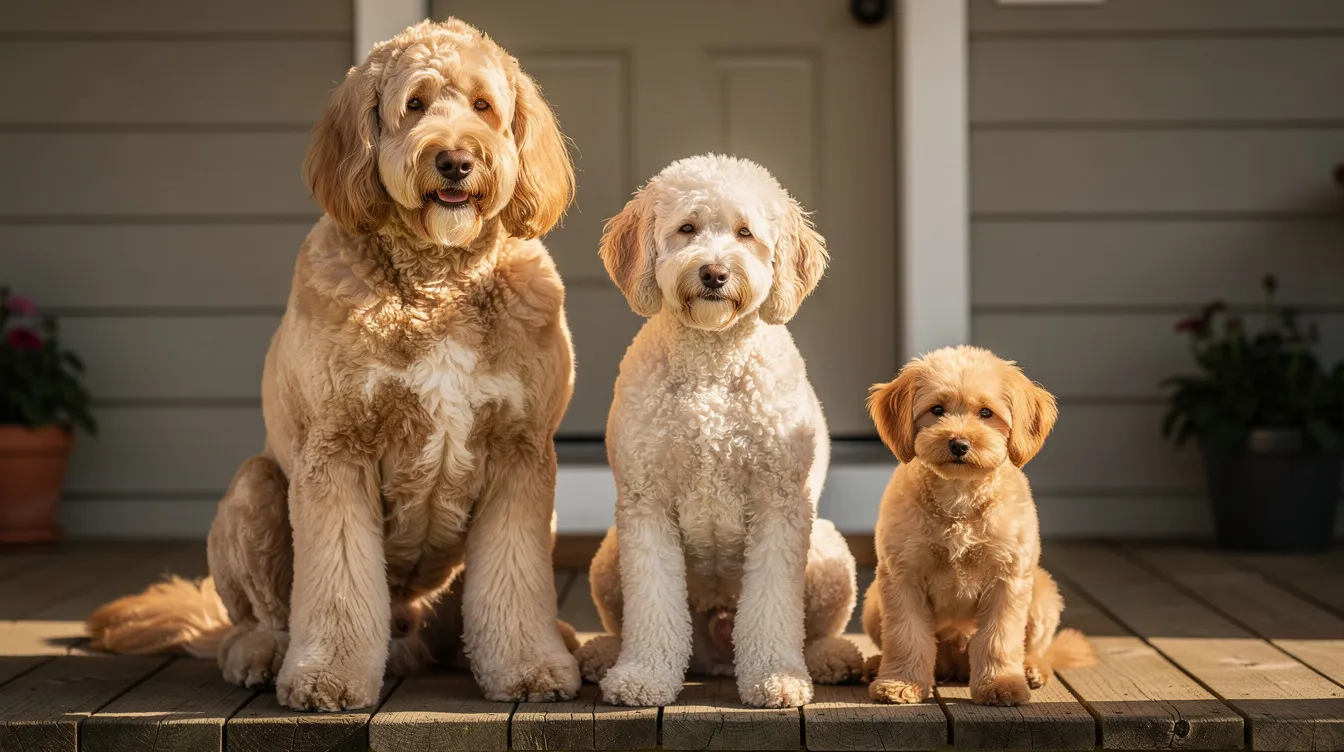
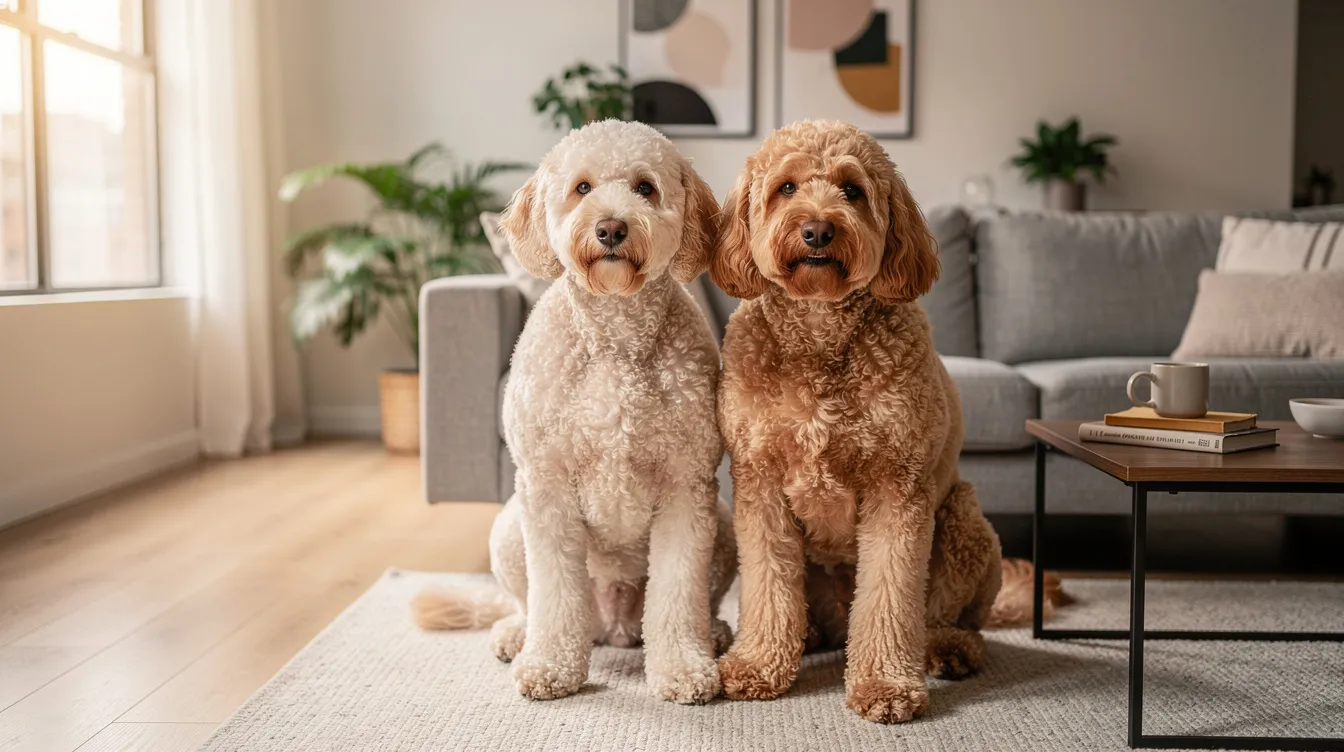
Miniature goldendoodles typically weigh 15 to 35 pounds and stand 13 to 20 inches tall at the shoulder. Compare that to a standard goldendoodle, which can easily exceed 50 pounds and 20-plus inches. That small size makes the mini version a fit for apartments, condos, and suburban homes-while still being big enough to romp at the dog park with kids and other dogs.
The breed gained momentum in the 1990s and 2000s, when families wanted the golden retriever's gentle nature in a smaller, non shedding coat package. That demand has only grown since.
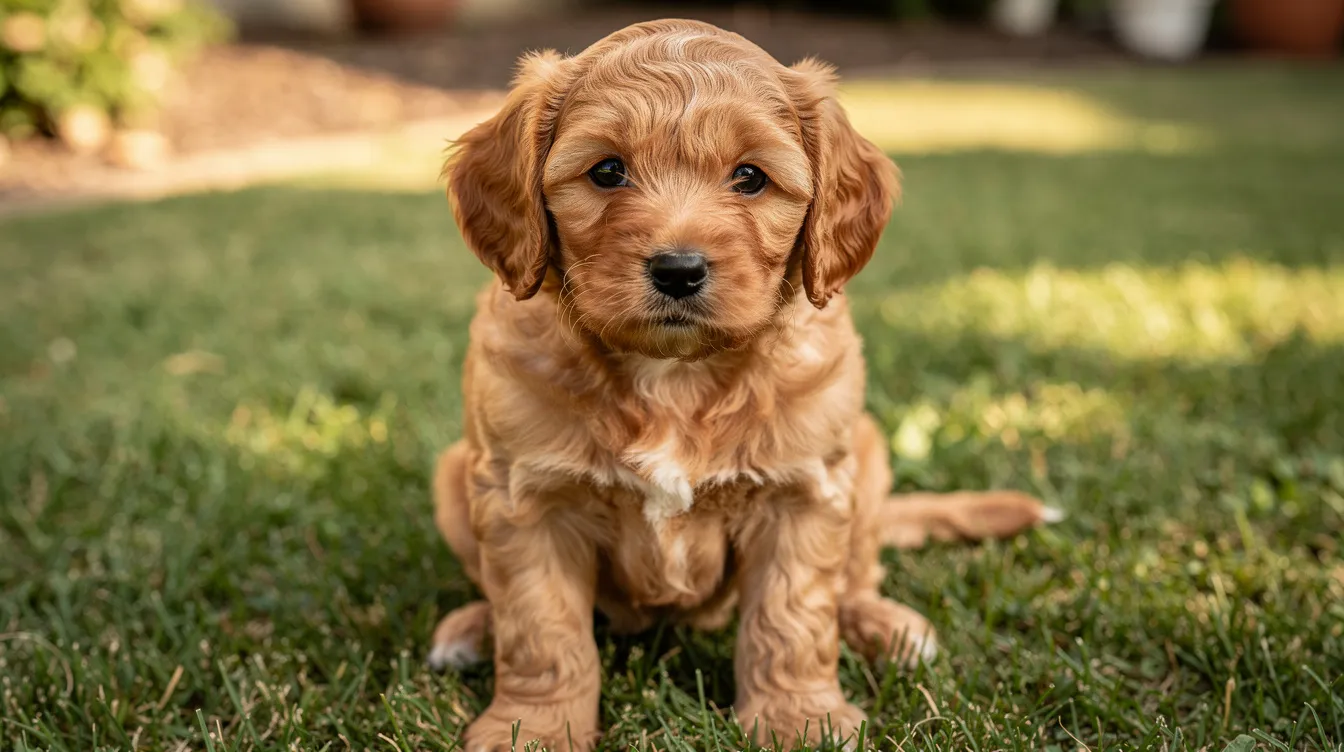
Miniature Goldendoodle Origins: Golden Retriever × Miniature Poodle
Mini goldendoodles are part of the broader doodle movement that followed the first labradoodle crosses in the late 1980s. Where labradoodles paired a labrador retriever with a poodle, goldendoodles swapped in the golden retriever-a 19th-century Scottish gundog originally bred for retrieving game on land and water. The American Kennel Club recognized the golden retriever in 1932, and the breed has been a top family pet ever since.
The other half of the equation is the miniature poodle, a dog with German hunting dogs in its ancestry and refinement in France. The mini poodle and toy poodle lines were developed for companionship and city life, valued for tight curls, high intelligence, and a non shedding coat. When you combine the two different breeds, you get a dog with the gentle demeanor and trainability of the golden retriever and the poodle traits of low shedding and a smaller frame.
Mini goldendoodles are typically bred as F1 or F1b generations. A first generation (F1) is a direct golden retriever × mini poodle cross with a 50/50 split of each parent's traits. An f1b mini is that F1 backcrossed to a poodle, making the offspring 75% poodle and 25% golden retriever-resulting in more curl and more predictable low shedding. Second generation mini goldendoodles are 75% poodle and 25% retriever and are generally more expensive. Reputable breeders often avoid multigenerational goldendoodles because predictability drops across several generations.
Size, Appearance, and Coat Types
Mini goldendoodles come with genuine variety in look and build, and outcomes vary depending on the parents and generation.
Most minis land between 15 and 30 pounds and 13 to 17 inches tall. Some lines produce pup sizes in the mid-30s, while micro or petite crosses target dogs under about 15 pounds. For a deeper comparison, check out What Size Goldendoodle Is Right For You? Understanding Weight Categories.
Coat texture falls into three categories:
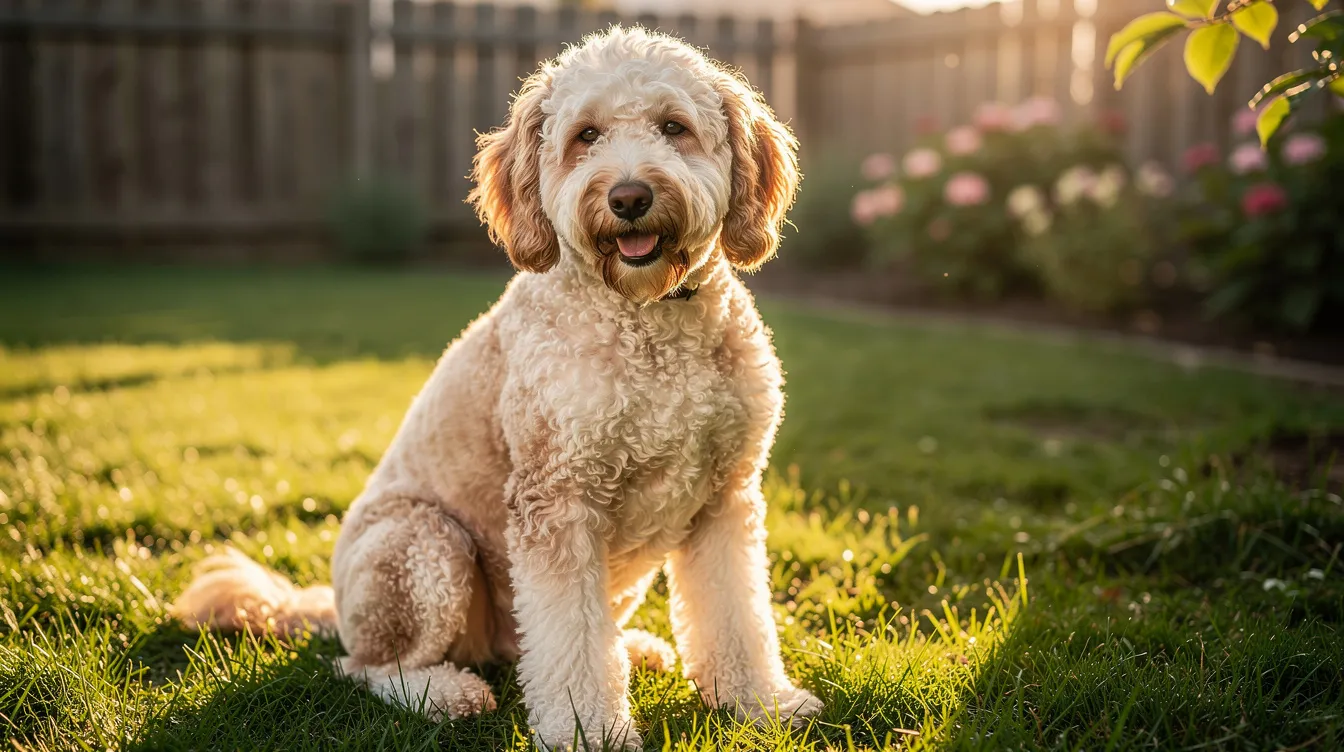
- Curly - closest to the poodle side, with tight curls that shed the least and trap loose hair. Best for allergy sufferers, but requires consistent grooming to prevent matting.
- Wavy - the classic doodle look. Moderate shedding, soft texture, and slightly easier to maintain than a full curl.
- Straight - leans toward the golden retriever coat. These dogs shed more, especially seasonally, and produce more dander.
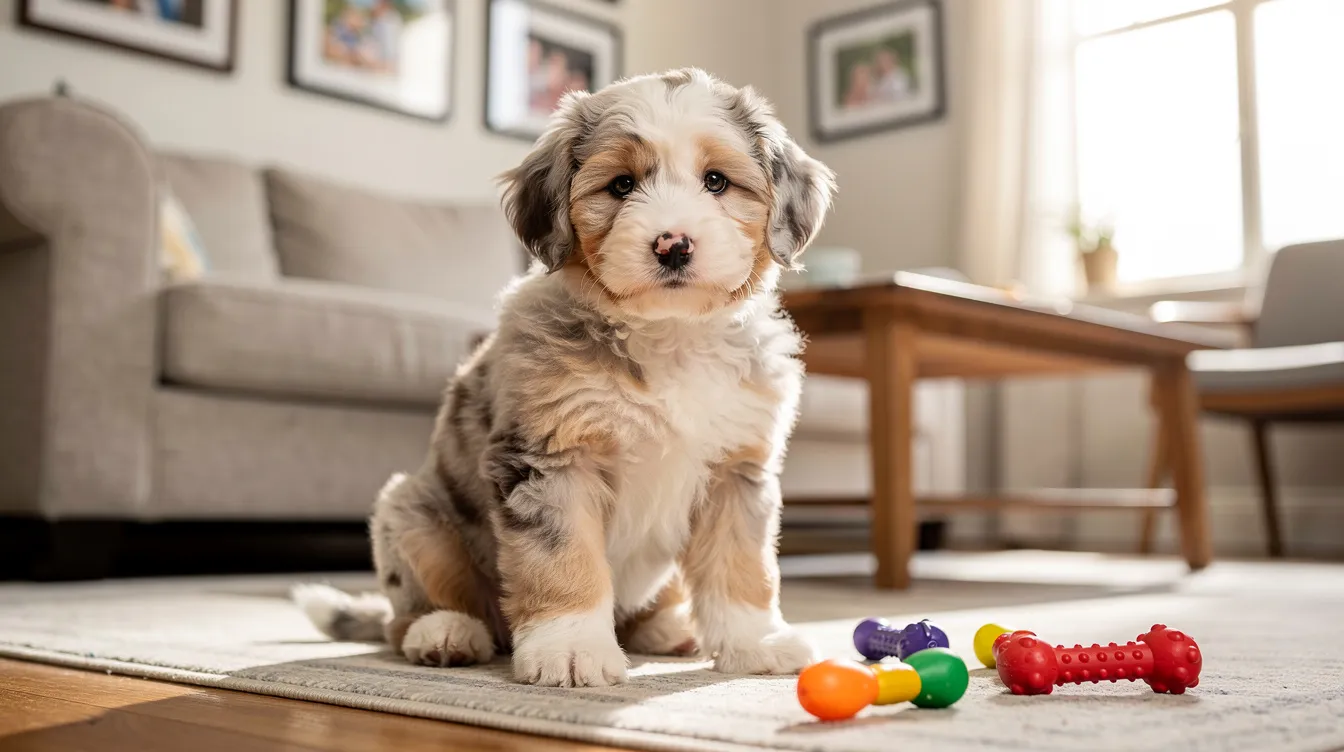
Coat colors span cream, apricot, red, mahogany, chocolate, black, parti, abstract, and merle. Responsible breeders avoid breeding two merle dogs together because of well-documented double-merle health risks.
How generation affects appearance: an F1 mini typically shows a balanced mix, while an f1b mini leans curlier and lower shedding thanks to stronger poodle genes. Multigen dogs can swing in any direction.
Temperament: Why Mini Goldendoodles Make Exceptional Family Dogs
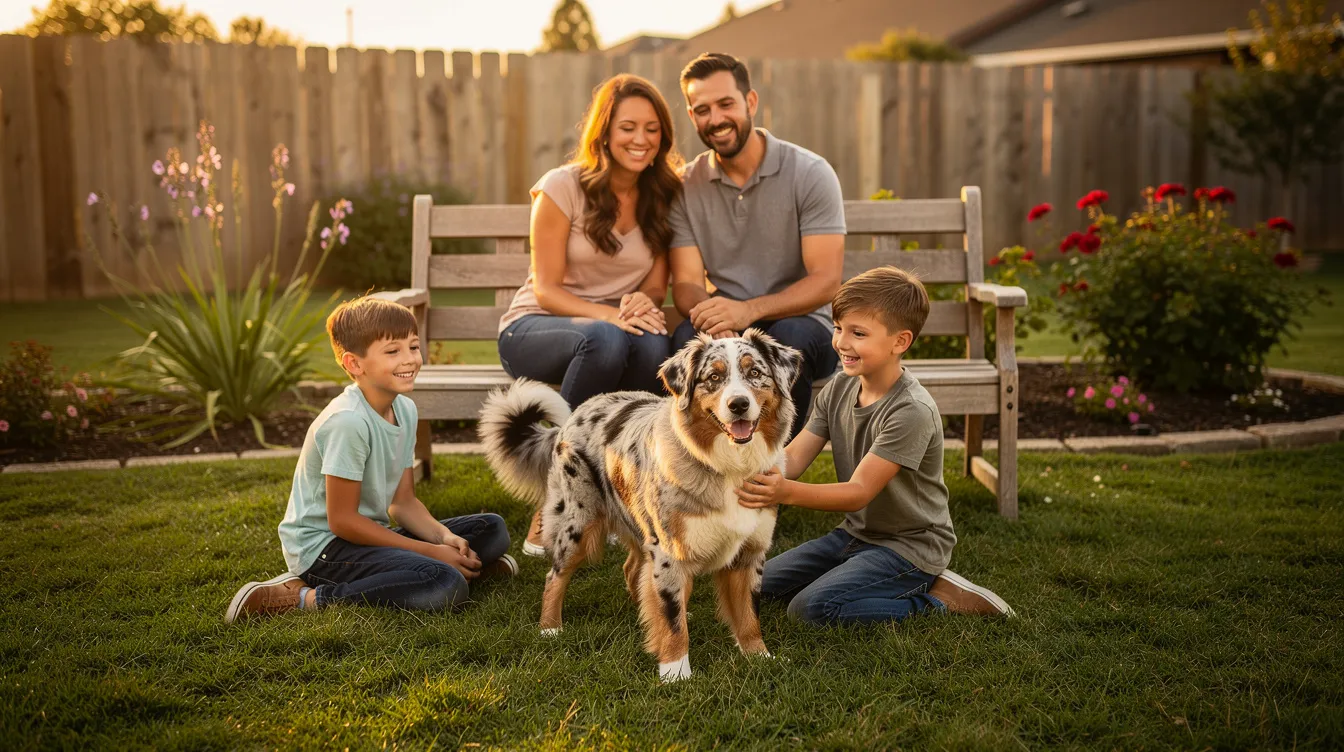
If you are looking for a cheerful, affectionate dog that genuinely thrives on human companionship, the miniature goldendoodle delivers. Mini goldendoodles are known for their affectionate nature, loyalty, and playfulness. They are non-aggressive and gentle with children, including small children, and generally get along well with other pets and other animals when properly socialized.
Their devotion and intuitive sensitivity make them natural therapy dogs and emotional support dogs. Many owners describe their doodle pressing close during a tough day or quietly sitting beside a family member who is unwell. One Bliss Kennels family shared how their goldendoodle puppy, barely five months old, began spending every evening curled next to their daughter during her recovery from minor surgery-never asked, never trained, just present.
Mini goldendoodles are not typically excessive barking dogs, but they will alert when someone is at the door or when something seems off. That moderate noise level suits apartment dwellers and suburban neighborhoods alike. However, they thrive on human companionship and can develop separation anxiety if left alone for extended stretches, so plan for company or a dog walker during long workdays.
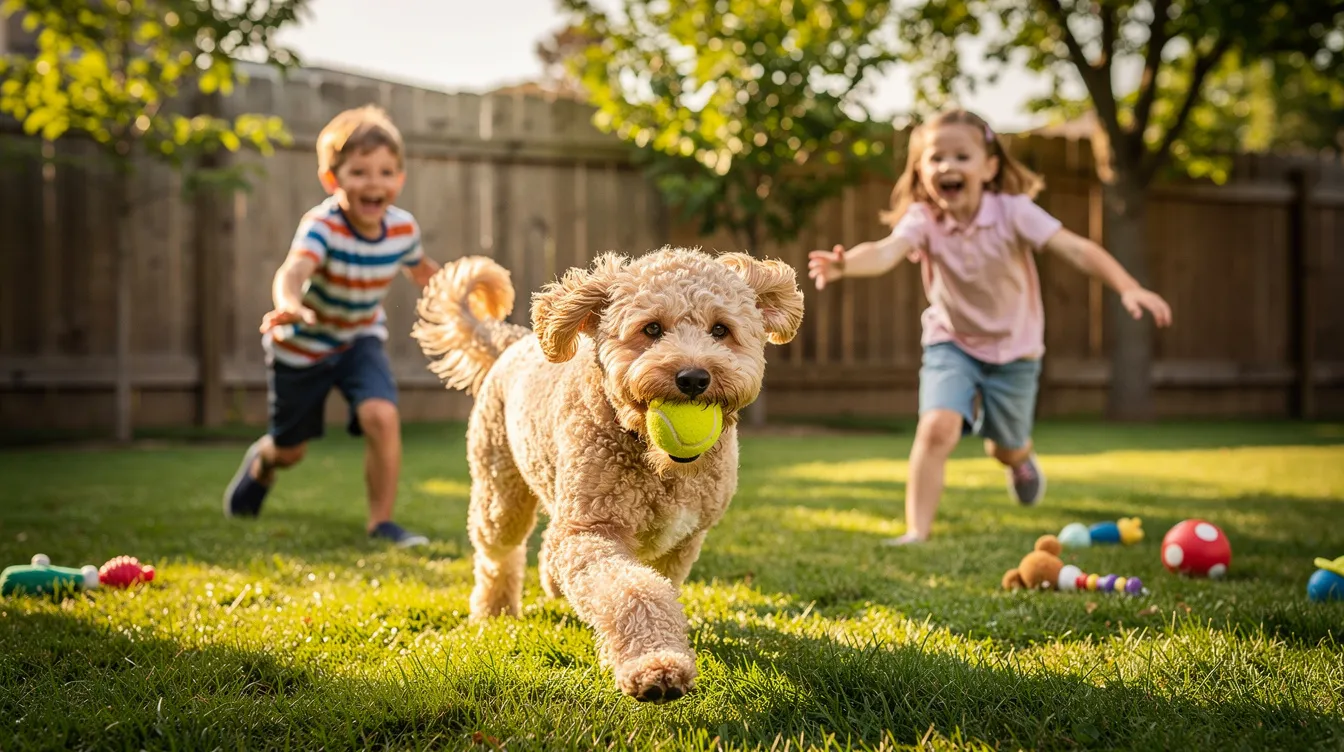
Intelligence, Trainability, and Activity Needs
Both the golden retriever and the poodle rank among the smartest dog breeds, so it is no surprise that the miniature goldendoodle is highly intelligent and an easy to train dog. Most pick up basic commands within a few short sessions and respond well to positive reinforcement, high-value treats, and upbeat energy.
Common roles they excel in include therapy visits, emotional support work, agility courses, and light service tasks like retrieving items for owners without major mobility issues. Their smaller frame limits heavy physical work compared to other breeds, but their drive to please makes up the difference.
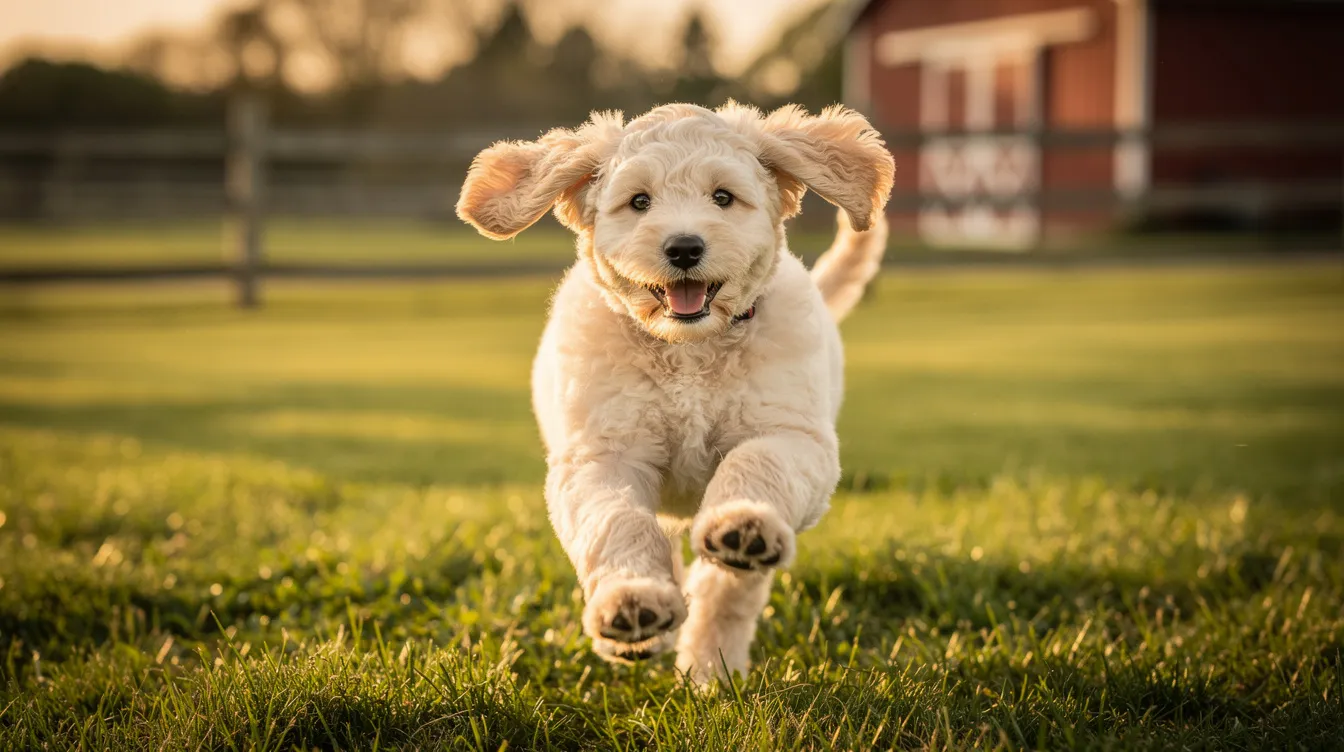
Mini goldendoodles require about 30 to 60 minutes of daily exercise-walks, fetch, play sessions, or mentally stimulating games like puzzle toys and scent work. Without that engagement, boredom can trigger unwanted behaviors such as chewing and barking. For activity ideas that translate across doodle breeds, see this Bernedoodle Exercise and Play guide.
Because they are bright and people-oriented, consistent training sessions and routine structure keep a mini goldendoodle calm, confident, and well-mannered.
Allergies, Shedding, and Grooming
Mini goldendoodles shed less than many other breeds, which is a major draw for allergy sufferers. That said, no dog is completely hypoallergenic, including mini goldendoodles. F1 mini goldendoodles have a 50/50 chance of being hypoallergenic, while f1b minis with their stronger poodle influence and curlier hypoallergenic coats are better for allergy sufferers due to low shedding. If allergies are a serious concern, spend time with an adult doodle before committing.
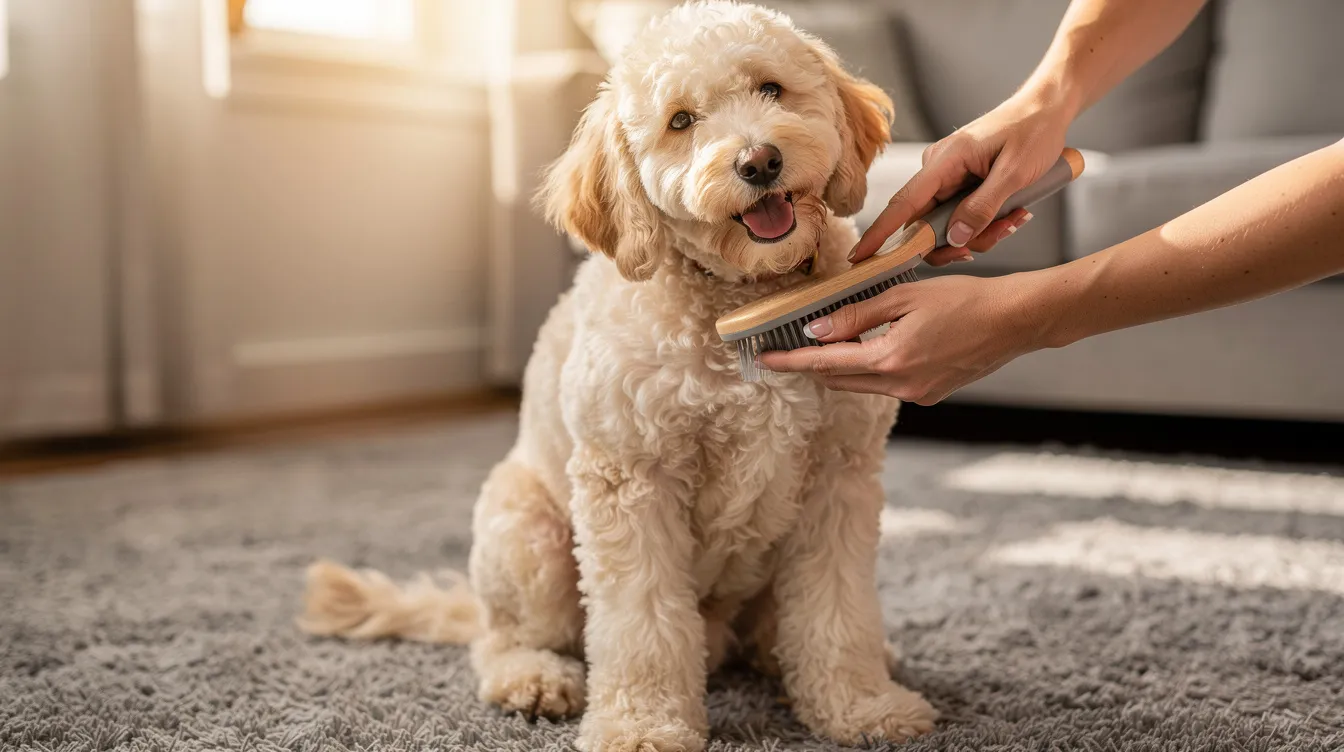
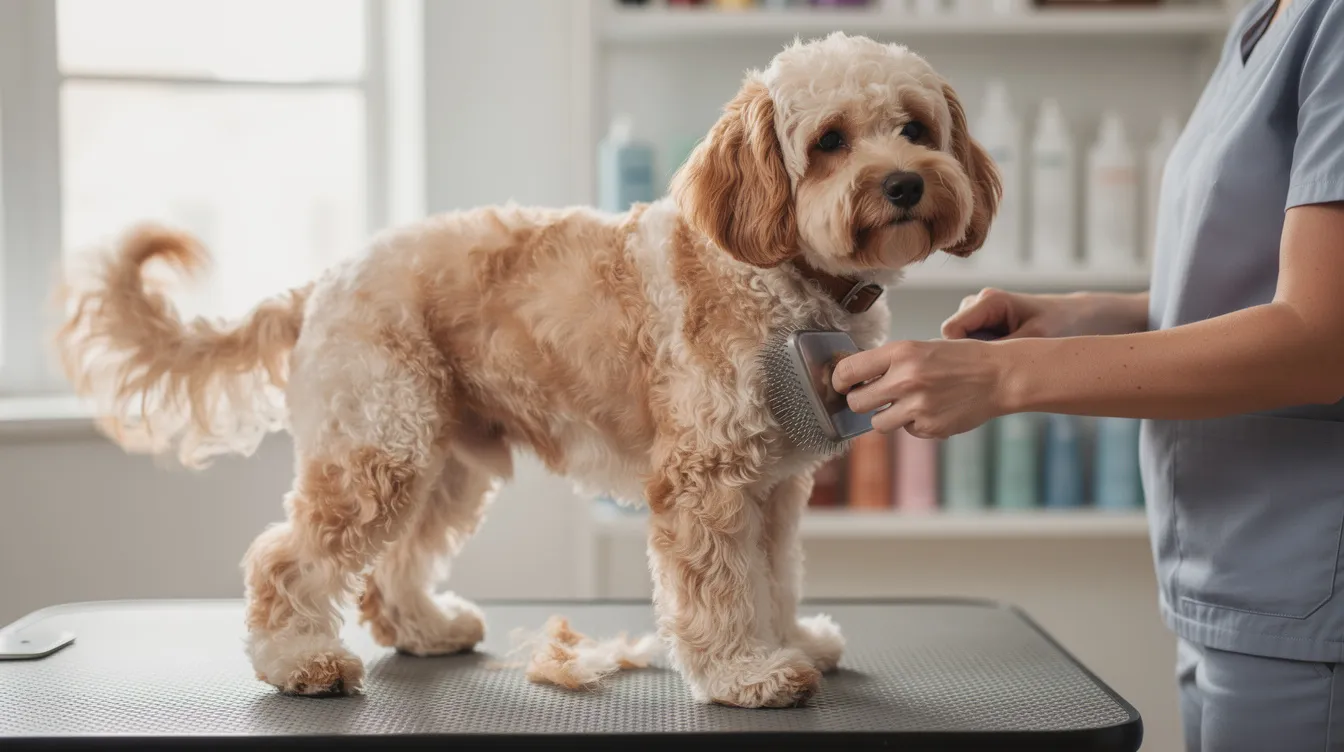
Low shedding does not mean low maintenance. Mini goldendoodles need brushing two to three times a week to prevent matting, especially behind ears, under collars, and around legs. Coats should be brushed regularly with a slicker brush or steel comb. Professional grooming is recommended every two to three months, with many owners finding that miniature goldendoodles benefit from regular grooming every 6 to 8 weeks to stay comfortable.
Additional care includes:
- Bathing as needed with mild dog shampoo
- Regular ear cleaning to prevent dirt buildup and infections
- Occasional nail trimming for paw health
- Brushing teeth several times a week, since smaller dogs are prone to dental issues
Introduce grooming early-miniature goldendoodle puppies that learn to accept brushing and handling at 8–10 weeks grow into adults that tolerate a professional groomer without stress. A popular approach is keeping the coat at a manageable 1–2 inch clip length between grooming appointments.
Health, Lifespan, and Common Issues
Mini goldendoodles have a lifespan of 10 to 15 years, with well-cared-for smaller individuals sometimes reaching the upper end of that range. As a cross between two different breeds, they can benefit from hybrid vigor, but that does not make them immune to inherited conditions.
Health issues to monitor include:
- Hip dysplasia and elbow dysplasia - abnormal joint development, more common in golden retriever lines
- Patellar luxation - kneecap slippage, a concern in smaller dog breeds
- Progressive retinal atrophy (PRA) - an inherited eye condition that can lead to vision loss
- Ear infections - floppy ears trap moisture; regular ear cleaning prevents infections in mini goldendoodles
- Skin allergies and dental disease - manageable with proper diet and care
Mini goldendoodles may inherit hip dysplasia from parents, so breeding practices should focus on eliminating genetic disorders through careful selection. Proper diet, maintaining a healthy weight, regular vet checks, and joint support supplements as animals age all contribute to a longer, more comfortable life.
Bliss Kennels does not perform DNA screening or genetic testing and does not offer written genetic health guarantees. However, they are careful with breeding selection, transparent with families about what they do and do not provide, and available for guidance throughout the dog's life. You can view their Sires & Dames to learn more about parent dogs.
Living With a Mini Goldendoodle: Home, Family, and Lifestyle Fit
Mini goldendoodles adapt well to various living environments-city apartments, New Jersey suburbs, or small farms-as long as they receive sufficient attention and daily exercise, and reputable Goldendoodle breeders focused on family companions can help match you with the right fit. Their small size makes them manageable for seniors or individuals with mobility issues who still want an active companion without the bulk of a standard poodle or golden retriever.
They are a strong fit for families with children, multi-pet households, and active singles or couples. Their gentle, patient nature means they coexist well with other dogs, cats, and even smaller animals when socialized early. For apartment-specific tips, see Living With A Mini Goldendoodle: An Apartment Dweller's Guide, and explore our broader dog breeds blog with training and care guides for additional support.
That said, these are social dogs. Leaving them alone for full workdays without a dog walker, doggy daycare, or a companion pet can trigger anxiety and destructive behavior. Crate training helps, but it is not a substitute for companionship.
A simple daily routine goes a long way: consistent feeding times, scheduled potty breaks, a morning or evening walk, a short training session, and a wind-down rest period. Structure keeps a mini goldendoodle calm and confident in any home.
Miniature Goldendoodle Puppies From Bliss Kennels
Bliss Kennels is a small, family-run breeder in Sussex County, New Jersey. We raise mini goldendoodles and other doodle hybrids-including Labradoodles, Cavapoos, Bernedoodles, and Aussiedoodles-on our family farm in Northern New Jersey, where puppies grow up with room to explore and socialize.
Our miniature goldendoodle puppies are raised in a family environment with early exposure to household sounds, children, and other animals. We begin basic crate and potty introductions before puppies go home, giving your pup a head start. Puppies are priced around $2,000, though exact pricing can vary depending on litter and size. All puppies are sold as companions, not for breeding.
We do not provide written contracts or genetic health guarantees, but we are honest about our practices and offer ongoing guidance and support for the life of your pet—our dog breeder reviews from Bliss Kennels families highlight this commitment. We focus on temperament, health, and matching the right dog to the right family.
Check Available Puppies for current miniature goldendoodle puppies, explore our broader puppies for sale guide to finding your new best friend, or contact us at 973-876-1680 or sjel1971@gmail.com to ask about upcoming litters.

Bliss Kennels Services and Nationwide Delivery
While Bliss Kennels is based in New Jersey, families across the United States adopt our puppies. We offer multiple delivery options to make the process smooth:
- PAXI pet transport - a professional, animal-friendly puppy delivery service for safe nationwide transport
- Personalized delivery - ground transport or flight nanny service arranged directly with us when feasible
- In-person pickup - visit our Sussex County farm by appointment, meet the puppies, and see where they were raised
After your puppy arrives, our support continues. We provide advice on nutrition, training, and grooming, along with recommendations for oils and joint support products we carry. Bliss Kennels can coordinate nationwide delivery logistics, so reach out early to plan around the 8-week go-home age.
Cost, Preparation, and Choosing the Right Mini Goldendoodle
Bringing home a miniature goldendoodle puppy is a long-term commitment-emotionally and financially. Mini goldendoodles typically cost between $1,000 and $3,000, with the average price for a mini goldendoodle around $1,500. Prices vary based on breeder, location, and demand. Bliss Kennels currently prices puppies around $2,000. Beyond purchase price, budget for food, grooming, vet care, training classes, toys, and optional pet insurance.
When choosing the right dog, consider:
- Size expectations - do you want a smaller micro-range doodle or a more robust mini?
- Coat type - curlier coats are better for allergy sufferers; wavy coats are easier to maintain
- Energy and temperament - some puppies are calmer, some are livelier; match this to your household, whether you have kids, seniors, or a quieter routine
Before pickup or delivery, have these basics ready: crate, playpen, food and water bowls, high-quality puppy food, leash and harness, chew toys, grooming tools, and cleaning supplies for house-training accidents. Our Puppy Start Guide walks you through preparation in detail, and our dedicated guide to raising mini Goldendoodle puppies with love covers day-to-day care once your puppy is home.
We encourage potential owners to speak directly with us about household needs so we can help match you with the best miniature goldendoodle puppy for your life.
Frequently Asked Questions About Miniature Goldendoodles
Below are answers to questions we hear most often from families considering a mini goldendoodle.
Do mini goldendoodles stay small enough for apartments?
Most minis reach 15 to 30 pounds as adults, which is well-suited to apartment living as long as you provide daily walks and play. Bliss Kennels can advise whether a particular puppy is likely to land on the smaller or larger end based on its parents.
Are mini goldendoodles good for people with dog allergies?
Mini goldendoodles are better for allergy sufferers due to low shedding, especially curlier f1b coats. However, no dog is completely hypoallergenic. If allergies are a concern, try spending time with an adult doodle or visiting a puppy in person before committing.
How old are Bliss Kennels puppies when they go home?
Our miniature goldendoodle puppies typically go home around 8 weeks of age, after they are weaned, have had an initial vet visit and age-appropriate vaccines, and are ready to begin life with their new family.
Does Bliss Kennels offer training or help after adoption?
We do not run formal obedience classes, but we provide guidance on house-training, crate training, and early socialization. We also offer miniature goldendoodles require frequent socialization and positive reinforcement training advice and remain available by phone or email for questions throughout your dog's life.
How do I reserve a miniature goldendoodle puppy from Bliss Kennels?
Check our website for available litters, then contact us at 973-876-1680 or sjel1971@gmail.com. We will discuss timing, preferences, and whether a deposit is needed for your chosen puppy. From there, we schedule pickup at our farm or arrange nationwide delivery once the pup is old enough.
Conclusion and Call to Action
A miniature goldendoodle brings together everything families love-warmth, intelligence, a non shedding coat, and a cute, manageable size that works in nearly any living situation. Whether you are a rescue advocate exploring breed options or a family ready to welcome a goldendoodle puppy, understanding the breed inside and out helps you make the best decision.
Families near New Jersey and across the U.S. can work with Bliss Kennels for well-socialized mini goldendoodle puppies raised on a family farm, backed by honest, lifelong breeder support. Visit blisskennels.com for current miniature goldendoodle puppies, call 973-876-1680, or email sjel1971@gmail.com to ask questions, join a waitlist, or arrange delivery.
Still researching? Save this guide, share it with your family, and reach out any time with questions about size, allergies, or lifestyle fit before reserving your next furry friend.
Recent Posts